
In short
U5 soccer is play, not games: short practices of 30 to 45 minutes, a ball for every child, 1v1 to 4v4 games without goalkeepers, and no scores that matter. Video is for the coach, not for the kids: a phone on a tripod shows you which games keep everyone moving and who barely touches the ball, so you can change next week's practice. Never post clips of U5 players publicly.
What U5 soccer is, and what it is not
At three and four, kids are discovering the ball, their own bodies and each other. Their attention lasts a few minutes at a time, they all chase the ball together, and that is normal. The job of a U5 coach is to make every child want to come back next week, and to give them as many touches on the ball as possible while they are there.
That means no lines of kids waiting for a turn, no long explanations, and no positions. If an activity takes more than a sentence to explain, it is too complicated for this age.
- One ball per child for most of the practice.
- Activities of five to ten minutes, then something new.
- Stories and imagination: pirates, dragons, traffic lights.
- Small games at the end, with very small teams.
- Praise effort and bravery, not results.
Typical formats at U5
Formats differ by country and club, so check what your association recommends. As a guide: US Soccer's guidance starts at 4v4 without goalkeepers. In England, organized small-sided games usually begin around U7, and the youngest age groups play informal small games. Germany moved its youngest players to 2v2 and 3v3 games on four mini-goals.
Whatever the rule, the principle is the same everywhere: the smaller the team, the more often each child touches the ball.
- Games: 1v1, 2v2, 3v3, at most 4v4.
- No goalkeepers; small goals, cones or gates.
- Field: roughly 15 by 10 to 20 by 15 meters (about 16 by 11 to 22 by 16 yards) for 3v3.
- Size 3 ball, soft enough not to scare anyone.
- Games of two to four minutes, then switch teams or rest.
- Restart with a dribble-in, not a throw-in.
What to coach at this age
U5 players learn by doing. The technical goals are simple: moving with the ball close, stopping it, turning, kicking it toward a target, and scoring. Everything else, from passing to positions, comes later.
- Ball mastery: touching the ball with every part of the foot.
- Dribbling: keeping the ball close while moving.
- Stopping and starting: freezing the ball on command.
- Shooting: scoring in small goals from short distances.
- Agility, balance and coordination through play.
Should you film U5 players at all?
Most of the time, you do not need to. When filming is useful at this age, it is for the coach: to see whether an activity actually kept everyone moving, whether one child never touched the ball, or whether a game was too big. One short recording of a practice from the side, with the whole area in frame, answers those questions better than memory.
Do not use video to correct three- and four-year-olds. If you show them anything, show a goal they scored, in a private setting, with the parents' agreement.
- Ask the club first and follow its policy.
- Get written consent from parents before filming.
- Film for coaching only, never for social media.
- Share privately, and delete at the end of the season.
How TacticalSnap helps at U5
TacticalSnap's scan and player tracking are built for games, and its smallest game format is 5v5, so for play-based U5 practices the useful tools are simpler. Use the Pre-Match board to sketch the areas, gates and teams of a practice before you arrive, and show helpers or parents what you want. Freeze a frame of a recorded practice and draw on it to make your own notes: where kids bunched up, where the space was.
When the group starts playing real small-sided games, the 5v5 format and the filming guide below are the next step.
A simple routine for the season
- Plan each practice as three or four short games, drawn on the board.
- Once a month, film one practice from the side, whole area in frame.
- Watch it at home for ten minutes: count touches, spot who is left out.
- Change one thing next week: smaller teams, more balls, a new story.
- Delete the recording once you have your notes.
How-to videos for this age group
How to film a youth football match (U5–U10) so the video is actually useful
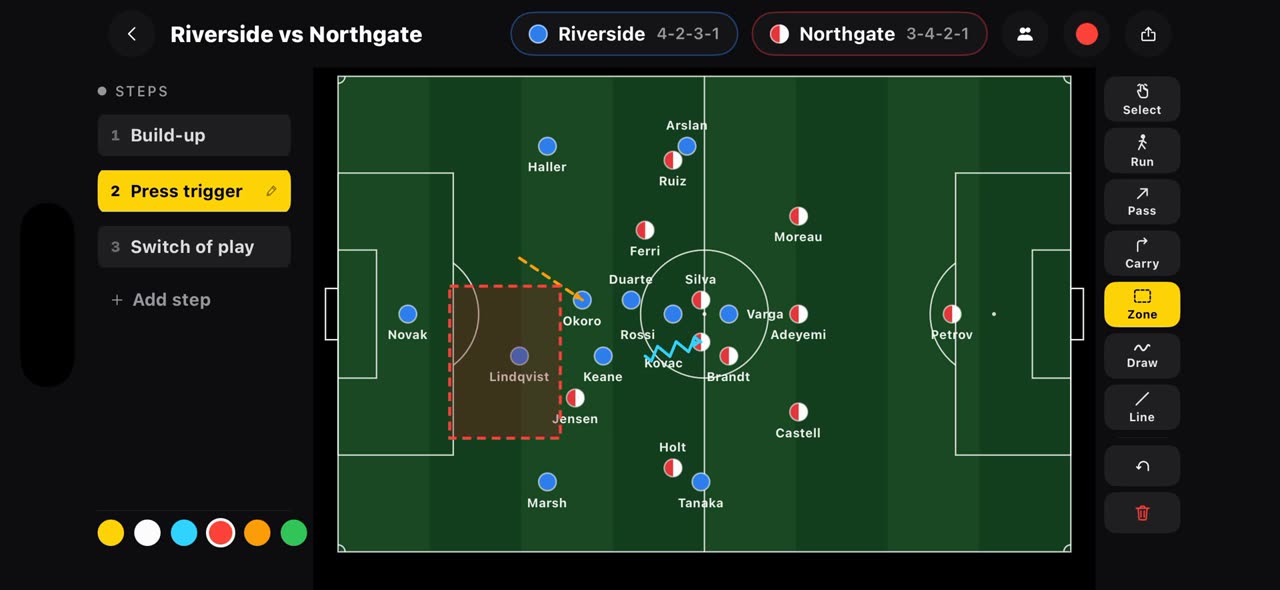
How to draw a plan before kick-off on the TacticalSnap Pre-Match board
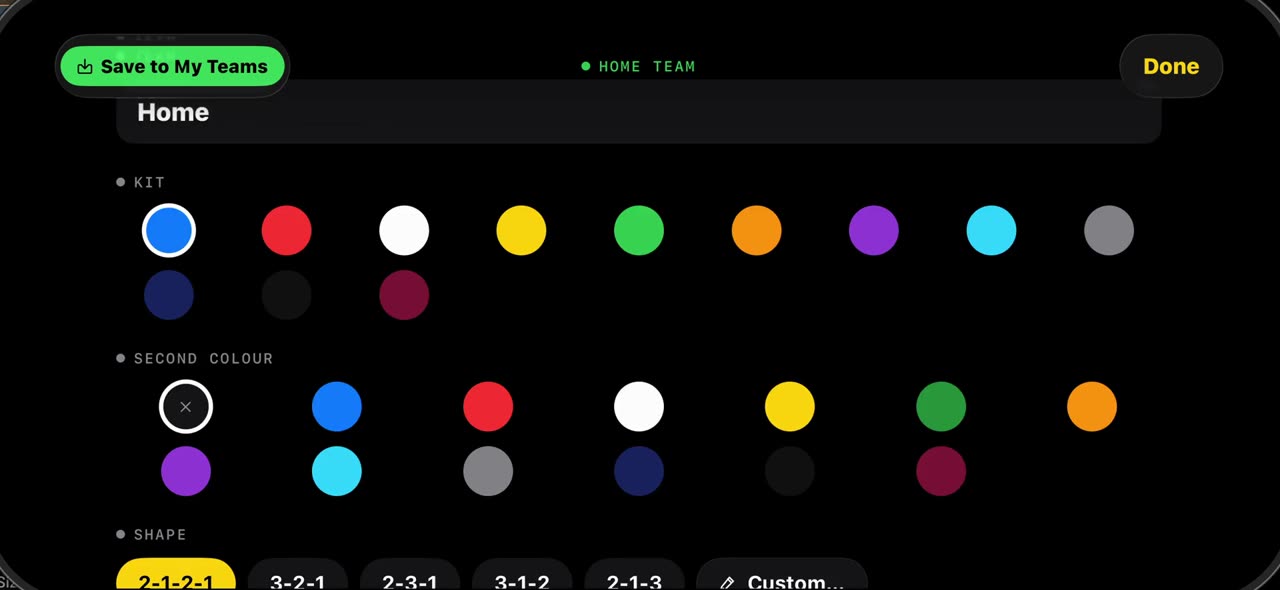
How to set up a 7v7, 9v9 or 5v5 board in TacticalSnap
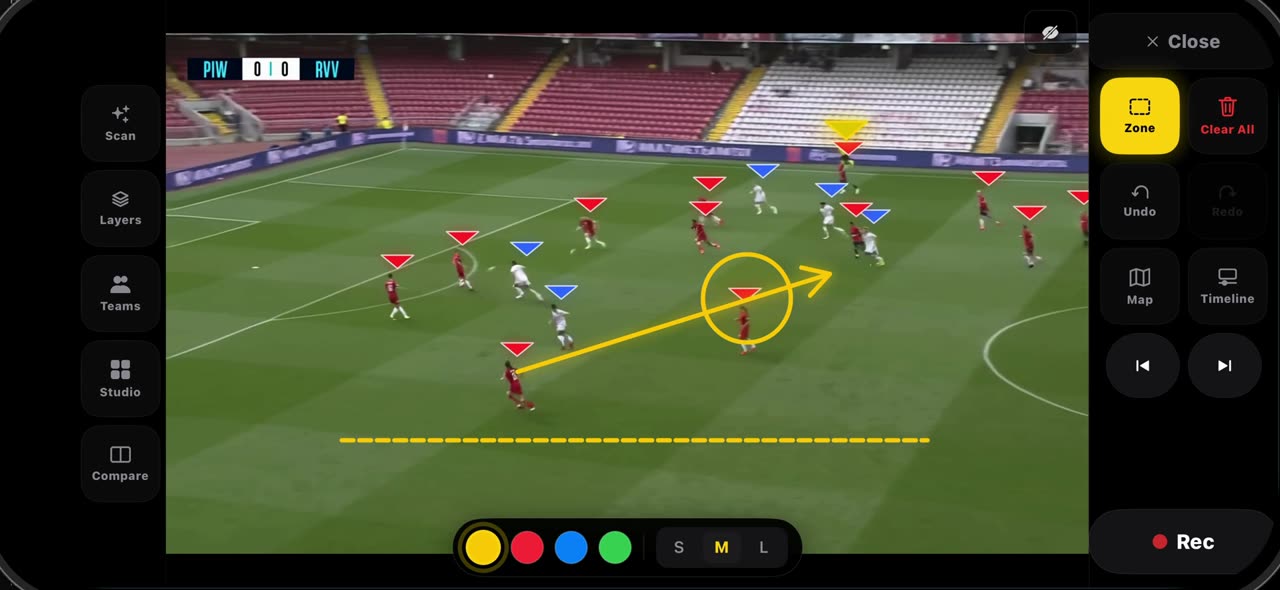
How to draw on a frozen frame in TacticalSnap (arrow, line, circle, zone, freehand)
Questions coaches ask
How long should a U5 soccer practice be?
Thirty to forty-five minutes is enough. Split it into activities of five to ten minutes, with water breaks, and end with small games.
Do U5 players play games?
Not in the adult sense. Most associations recommend play-based activities and very small games such as 2v2 or 3v3 without goalkeepers, with no standings.
Should U5 players have positions?
No. Everyone attacks and everyone defends. Positions mean fewer touches for most kids, and touches are what this age needs.
Is it okay to film kids' soccer?
Only with the club's permission and written parental consent, for coaching purposes, shared privately and deleted when no longer needed. Never post clips of young children publicly.
Can I use TacticalSnap for 3v3 games?
The game formats start at 5v5. For 3v3 and smaller games, use the Pre-Match board and the freeze-and-draw tools to plan practices and make notes.
Use it on your own games
TacticalSnap runs on an iPhone or iPad, entirely on the device. Every analysis tool is free; exporting video is the only paid step.