
In short
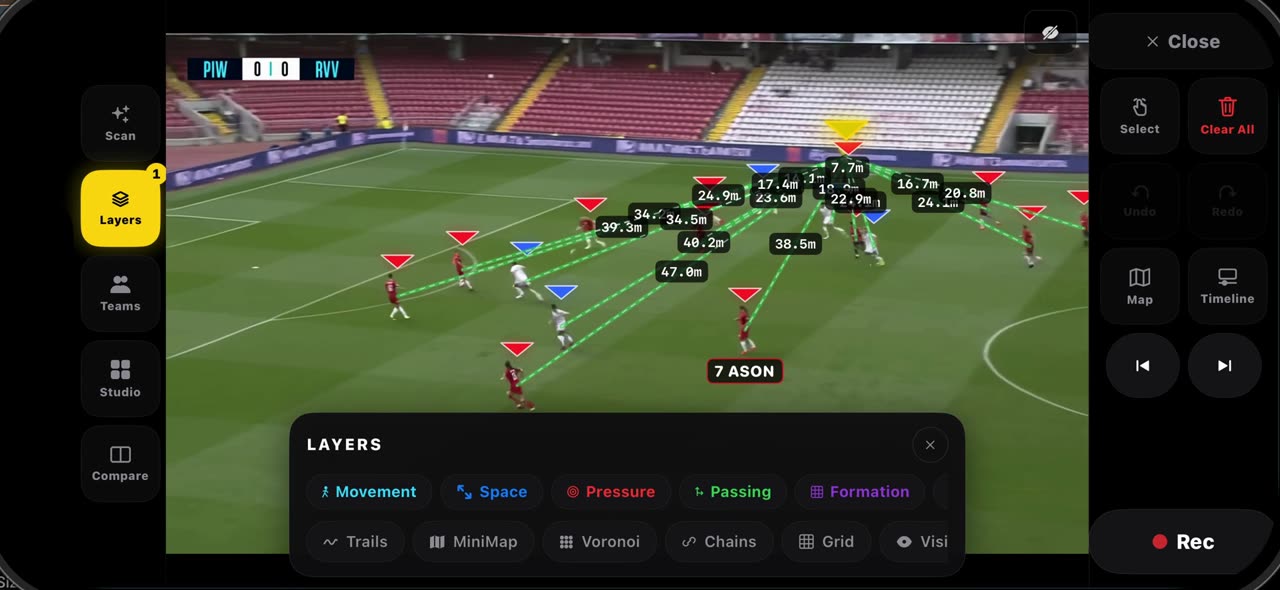
When you freeze a frame, the lines of the pitch are read and the frame is calibrated by itself — no corners to tap; the badge at the top says when the pitch is set. That calibration is why every passing lane and every gap comes with its real length in metres, not a guess from the camera angle, and why the grid, the mini map, Voronoi and the formation detection all sit on the same calibrated pitch. Everything stays on your device. iPhone and iPad.
Step by step
Calibrated at the freeze
When you freeze a frame, the lines of the pitch are read and the frame is calibrated by itself. There are no corners to tap: the badge at the top says when the pitch is set.
On screen: Freeze reads the pitch lines and calibrates the frame by itself. No corners to tap.
Distances in metres
That calibration is why every passing lane and every gap comes with its real length in metres. Eight metres is eight metres, not a guess from the camera angle.
On screen: Every lane and gap comes with its real length. Eight metres is eight metres.
Grid, map and shapes
The grid, the mini map, the player areas and the formation detection all sit on that same calibrated pitch, so what you draw from above matches what the camera saw.
On screen: Grid, mini map, Voronoi and formation all sit on the calibrated pitch.
What you need
- An iPhone or iPad with iOS 17 or later (or a Mac).
- TacticalSnap from the App Store. It is free to download and every analysis tool is free.
- A match video in Photos or Files. Any camera works, even a phone on the touchline.
Try it on your own footage
TacticalSnap runs the whole loop on an iPhone or iPad, on the device. Analysing is free and unlimited; exporting video is the only paid step.
More in this section
 0:40
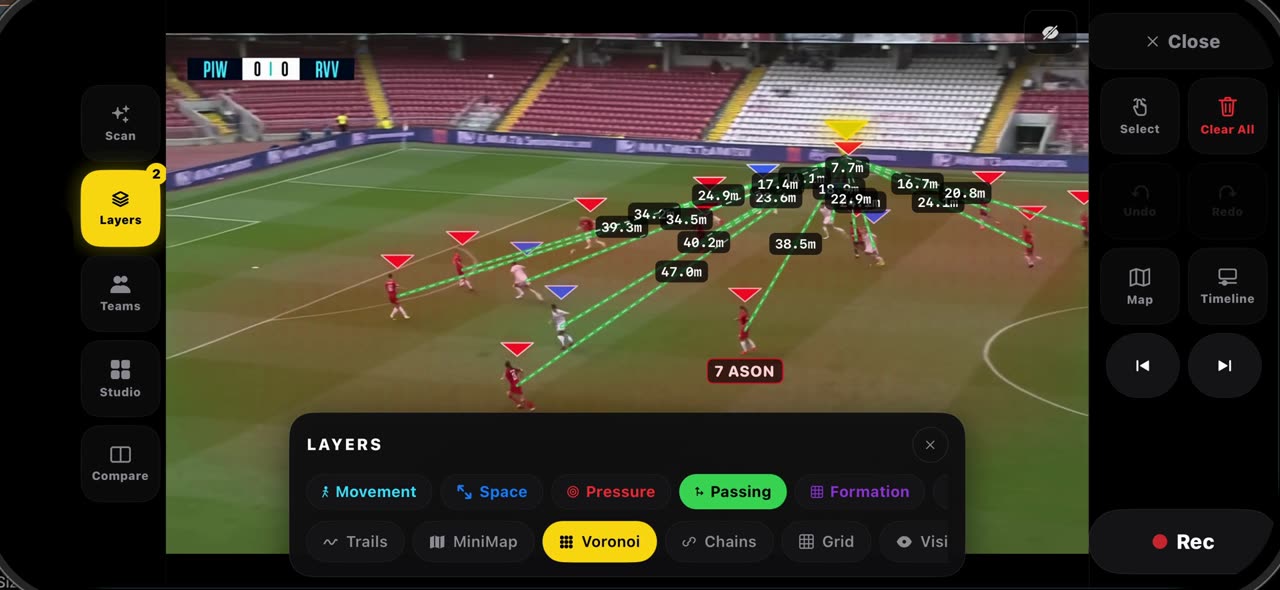
0:40How to read a frozen frame with the layers in TacticalSnap
Open Layers on a frozen frame.
 0:34
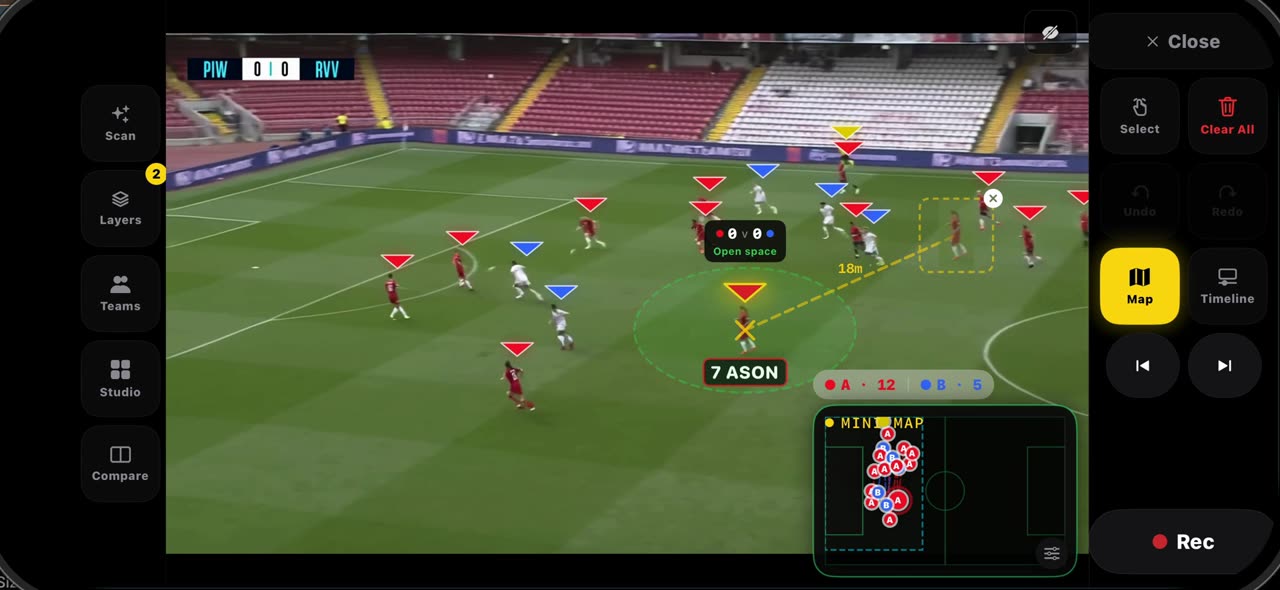
0:34How to use ghost players and Connect in TacticalSnap
Hold your finger on a player on a frozen frame and pick Ghost: a translucent copy of him, cut from the frame, appears next to the real one with a…
 0:33
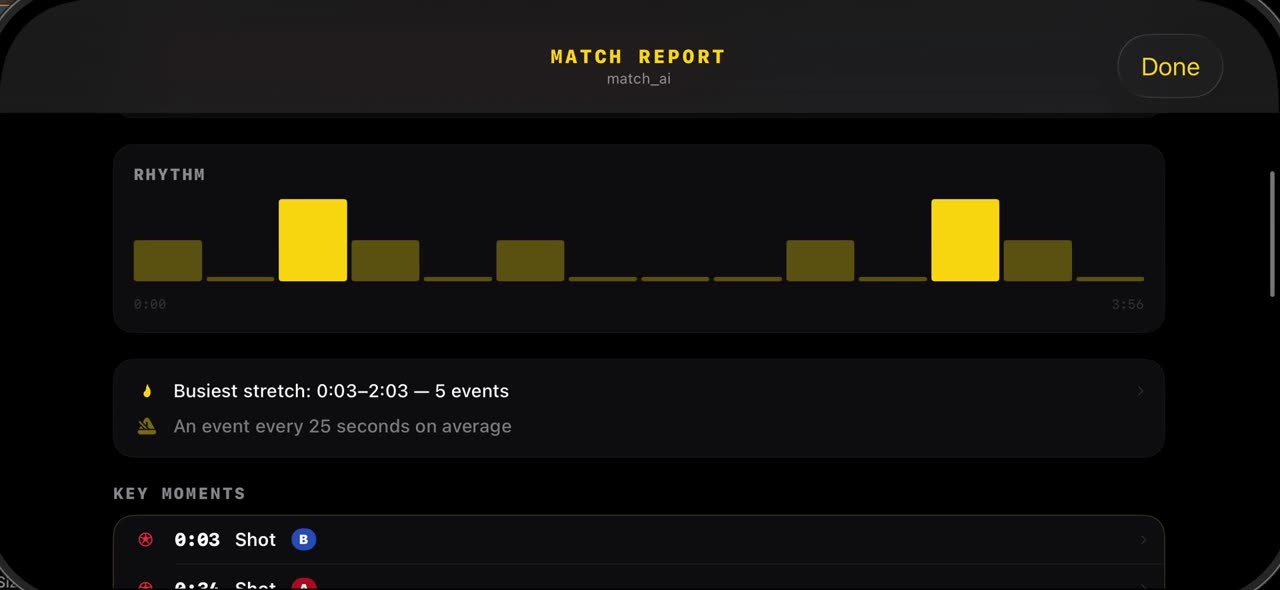
0:33How to read the match report in TacticalSnap
After the scan, open Studio and tap Match Report: the shots the scan found, the possession split and the rhythm of the game are already there, from…
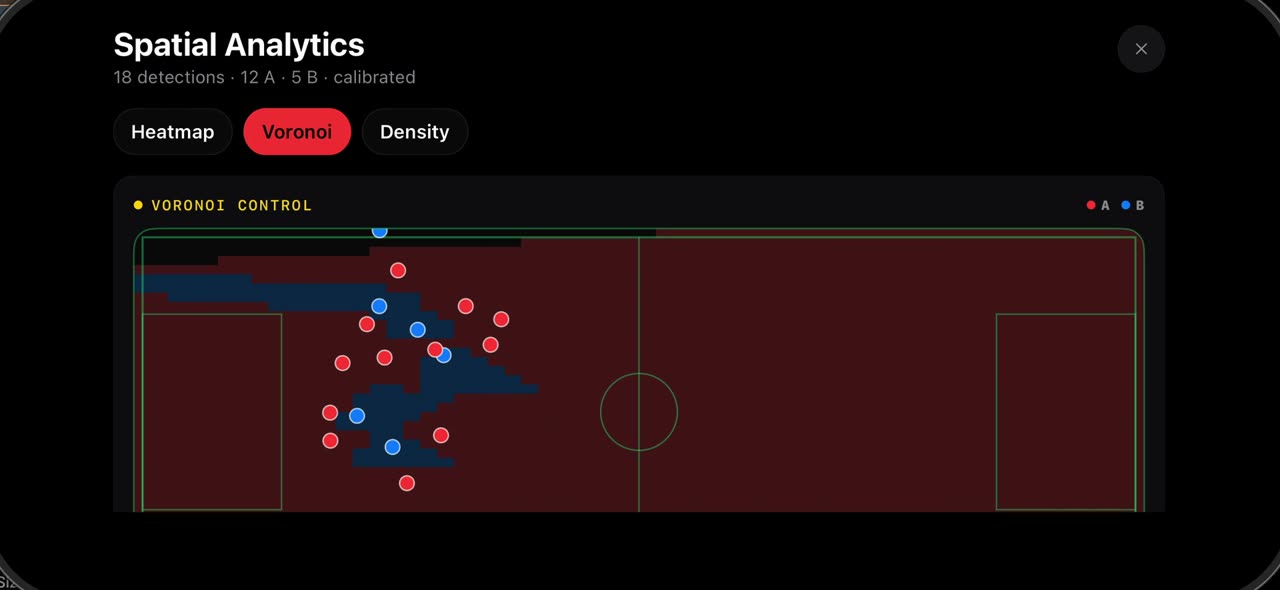 0:33
0:33How to see where your team played: heatmap, Voronoi and density in TacticalSnap
Open Studio and tap Spatial Analytics.
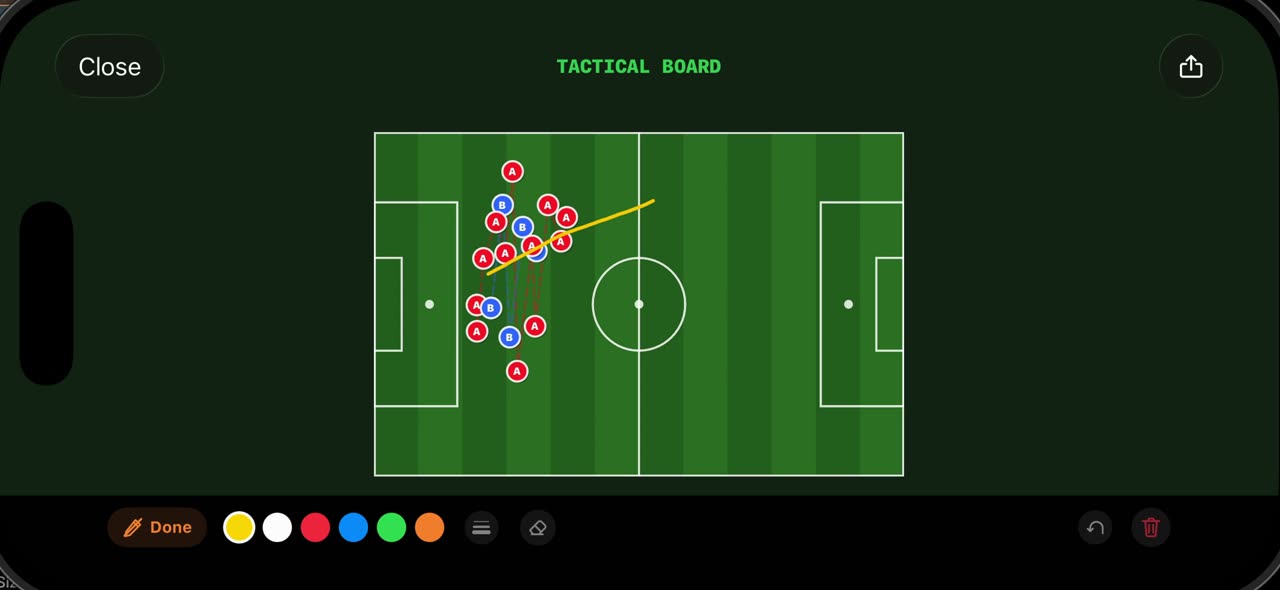 0:38
0:38How to use the Tactical Board and Hand-Drawn mode in TacticalSnap
Open Studio on a frozen frame and tap Tactical Board: the frame is redrawn as a 2D board from above, with every player the scan found placed where…
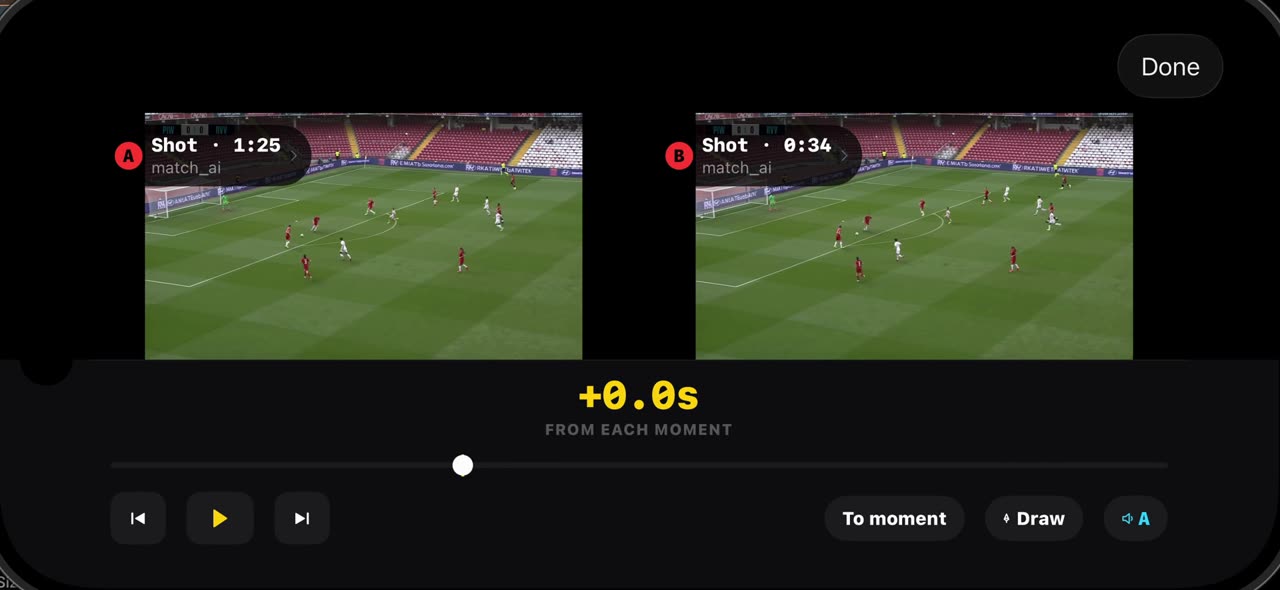 0:38
0:38How to compare two moments of a match in TacticalSnap
Compare puts two moments of your own match side by side.